


Central Park from the Rockefeller Center
Weekly Photo Challenge. Landscape: Central Park
Central Park is an urban park in middle-upper Manhattan, within New York City. Central Park is the most visited urban park in the United States as well as one of the most filmed locations in the world, with 40 million visitors in 2013.
The Park was established in 1857 on 778 acres (315 ha) of city-owned land. In 1858, Frederick Law Olmsted and Calvert Vaux, two soon-to-be famed national landscapers and architects, won a design competition to improve and expand the park with a plan they titled the “Greensward Plan”. Construction began the same year and the park’s first area was opened to the public in the winter of 1858. Construction continued during the American Civil War further south, and was expanded to its current size of 843 acres (341 ha) in 1873.

Central Park from the Rockefeller Center
Central Park was designated a National Historic Landmark (listed by the U.S. Department of the Interior and administered by the National Park Service) in 1962. The Park was managed for decades by the New York City Department of Parks and Recreation, and is currently managed by the Central Park Conservancy under contract with the municipal government in a public-private partnership. The Conservancy is a non-profit organization that contributes 75 percent of Central Park’s $65 million annual budget and is responsible for all basic care of the 843-acre park.
More in Wikipedia


Brooklyn bridge
Weekly Photo Challenge. Connected: Brooklyn bridge
The Brooklyn Bridge is a hybrid cable-stayed/suspension bridge in New York City and is one of the oldest bridges of either type in the United States. Completed in 1883, it connects the boroughs of Manhattan and Brooklyn by spanning the East River. It has a main span of 1,595.5 feet (486.3 m), and was the first steel-wire suspension bridge constructed. It was originally referred to as the New York and Brooklyn Bridge and as the East River Bridge, but it was later dubbed the Brooklyn Bridge, a name coming from an earlier January 25, 1867, letter to the editor of the Brooklyn Daily Eagle, and formally so named by the city government in 1915. Since its opening, it has become an icon of New York City, and was designated a National Historic Landmark in 1964 and a National Historic Civil Engineering Landmark in 1972.
More info: Wikipedia

Brooklyn bridge
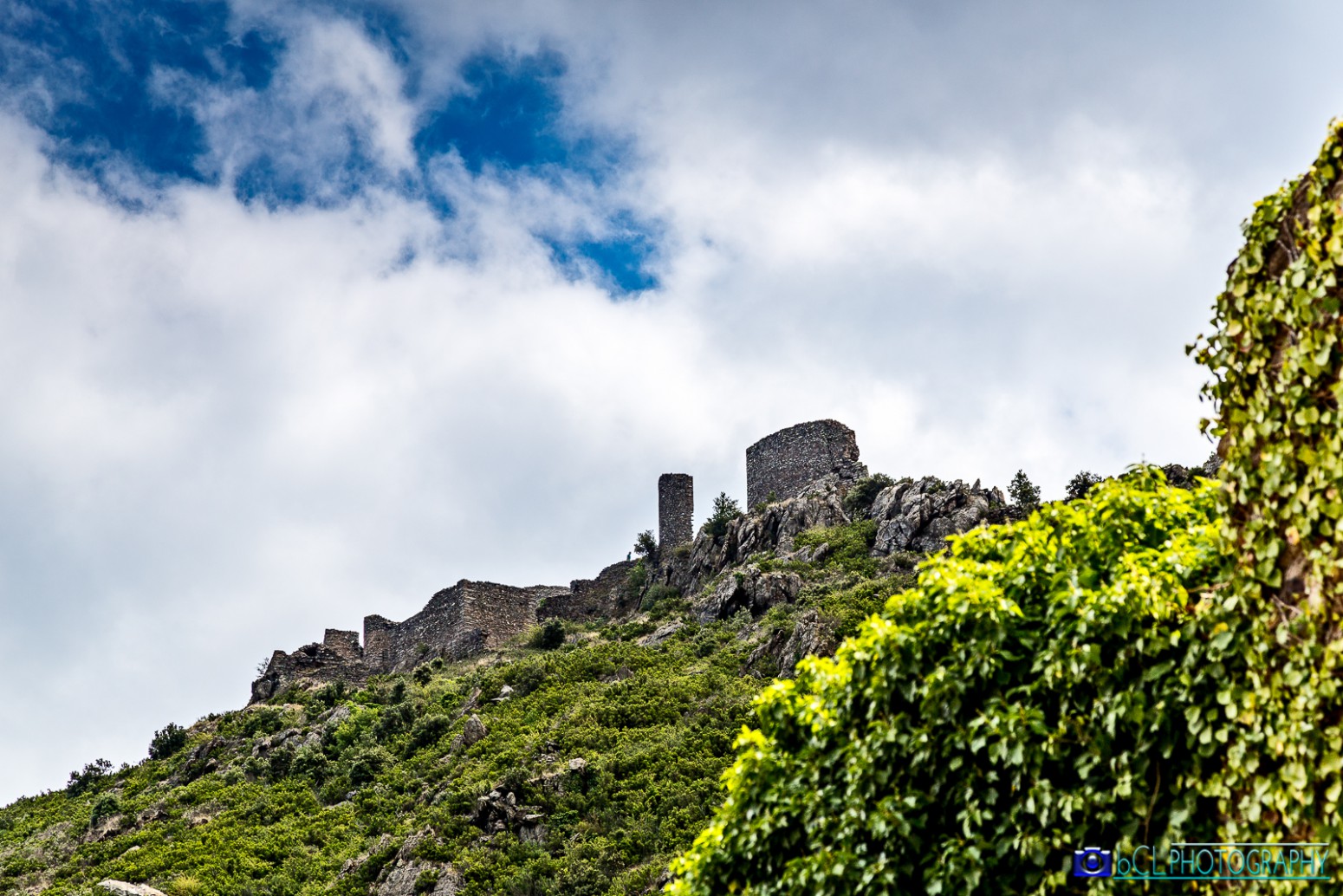
Ruins
Weekly Photo Challenge: Half and Half
This image that has two clear halves. I take a photo with an explicit dividing diagonal line .
This photo shows medieval ruins in San Pere de Rodas, in the province of Girona (Catalonia). The half left side shows the cloudy sky. The right side, the ruins on the hill.
Another view of the ruins with a different editing:

Ruins

Castelldefels beach
Weekly Photo Challenge: Muse
What subject keeps me coming back? There are several places I come back again and again looking for inspiration. One of them is the beach where I live, Castelldefels.
Castelldefels is a municipality in the province of Barcelona in Catalonia, noth-east of Spain. Its population is 63.255 (2014). It is located about 20 km (12 mi) southwest of Barcelona. The town is famous for its long beach (more than 5 km).

Castelldefels beach
I love the sunrise and sunset moments, and some days I need to go to enjoy of this beach. I always do some interesting photo.
I’ve posted this same beach two times: Sports on the beach. Kite-surf and Sunset in Castelldefels.

Castelldefels beach

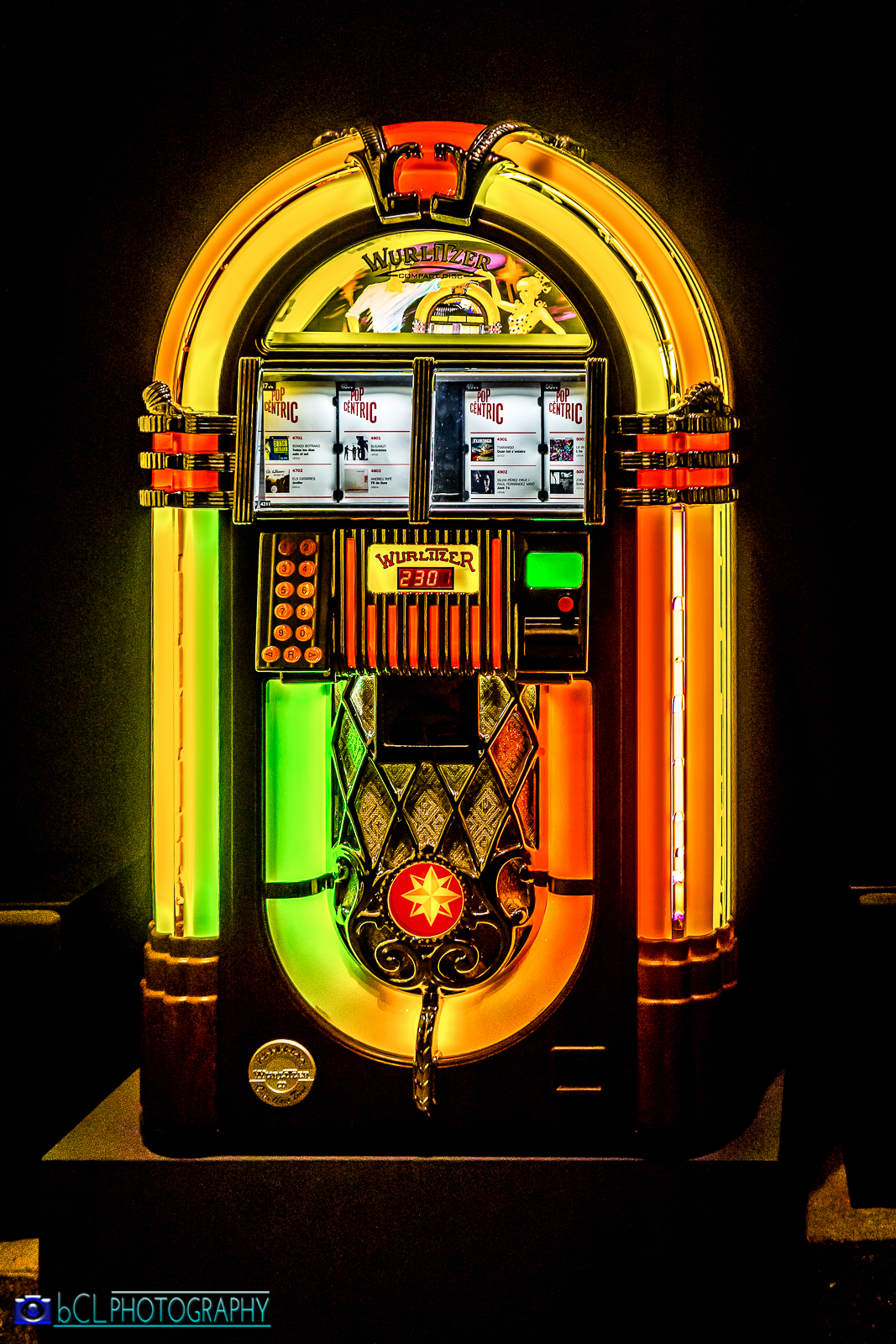
Jukebox Wurlitzer
Weekly Photo Challenge: Vivid
This is my entry to this week topic: the Jukebox
A jukebox is a partially automated music-playing device, usually a coin-operated machine, that will play a patron’s selection from self-contained media. The classic jukebox has buttons with letters and numbers on them that, when entered in combination, are used to play a specific selection.
Coin-operated music boxes and player pianos were the first forms of automated coin-operated musical devices. These instruments used paper rolls, metal disks, or metal cylinders to play a musical selection on the instrument, or instruments, enclosed within the device. In the 1890s these devices were joined by machines which used actual recordings instead of physical instruments. In 1890, Louis Glass and William S. Arnold invented the nickel-in-the-slot phonograph, the first of which was an Edison Class M Electric Phonograph retrofitted with a device patented under the name of Coin Actuated Attachment for Phonograph. The music was heard via one of four listening tubes.
Early designs, upon receiving a coin, unlocked the mechanism, allowing the listener to turn a crank that simultaneously wound the spring motor and placed the reproducer’s stylus in the starting groove. Frequently, exhibitors would equip many of these machines with listening tubes (acoustic headphones) and array them in “phonograph parlors”, allowing the patron to select between multiple records, each played on its own machine. Some machines even contained carousels and other mechanisms for playing multiple records. Most machines were capable of holding only one musical selection, the automation coming from the ability to play that one selection at will. In 1918 Hobart C. Niblack patented an apparatus that automatically changed records, leading to one of the first selective jukeboxes being introduced in 1927 by the Automated Musical Instrument Company, later known as AMI.
Greater levels of automation were gradually introduced. As electrical recording and amplification improved there was increased demand for coin-operated phonographs.
The term jukebox came into use in the United States beginning in 1940, apparently derived from the familiar usage “juke joint”, derived from the Gullah word “juke” or “joog” meaning disorderly, rowdy, or wicked.
Song-popularity counters told the owner of the machine the number of times each record was played (A and B side were generally not distinguished), with the result that popular records remained, while lesser-played songs could be replaced.
Initially playing music recorded on wax cylinders, the shellac 78 rpm record dominated jukeboxes in the early part of the 20th century. The Seeburg Corporation introduced an all 45 rpm vinyl record jukebox in 1950; since the 45s were smaller and lighter, they soon became the dominant jukebox media for the last half of the 20th century. 33⅓-R.P.M., C.D.s, and videos on DVDs were all introduced and used in the last decades of the century. MP3 downloads, and Internet-connected media players came in at the start of the 21st century.
The jukebox’s history has followed the wave of technological improvements in music reproduction and distribution. With its large speaker size, facilitating low-frequency (rhythm) reproduction, and large amplifier, the jukebox played sound with higher quality and volume than the listener could in his or her home, sometimes music with a “beat”.
Jukeboxes were most popular from the 1940s through the mid-1960s, particularly during the 1950s. By the middle of the 1940s, three-quarters of the records produced in America went into jukeboxes. While often associated with early rock and roll music, their popularity extends back much earlier, including classical music, opera and the swing music era. In 1977, The Kinks recorded a song called “Jukebox Music” for their album Sleepwalker.
Styling progressed from the plain wooden boxes in the early thirties to beautiful light shows with marbelized plastic and color animation in the Wurlitzer 850 Peacock of 1941. But after the United States entered the war, metal and plastic were needed for the war effort. Jukeboxes were considered “nonessential”, and none were produced until 1946. The 1942 Wurlitzer 950 featured wooden coin chutes to save on metal. At the end of the war, in 1946, jukebox production resumed and several “new” companies joined the fray. Jukeboxes started to offer visual attractions: bubbles, waves, circles of changing color which came on when a sound was played.
Models designed and produced in the late 20th century needed more panel space for the increased number of record titles they needed to present for selection, reducing the space available for decoration, leading to less ornate styling in favor of functionality and less maintenance.
Many manufacturers produced jukeboxes, including 1890s Wurlitzer, 1920s Seeburg, 1930s “Rock-Ola” whose name is actually based on that of the company founder, David Cullen Rockola, and Crosley.
In 1946, the Wurlitzer Model 1015 – referred to as the “1015 bubbler” offered 24 selections. More than 56,000 were sold in less than 2 years and it is considered a pop culture icon. Designed by Wurlitzer’s Paul Fuller.
More info: Wikipedia
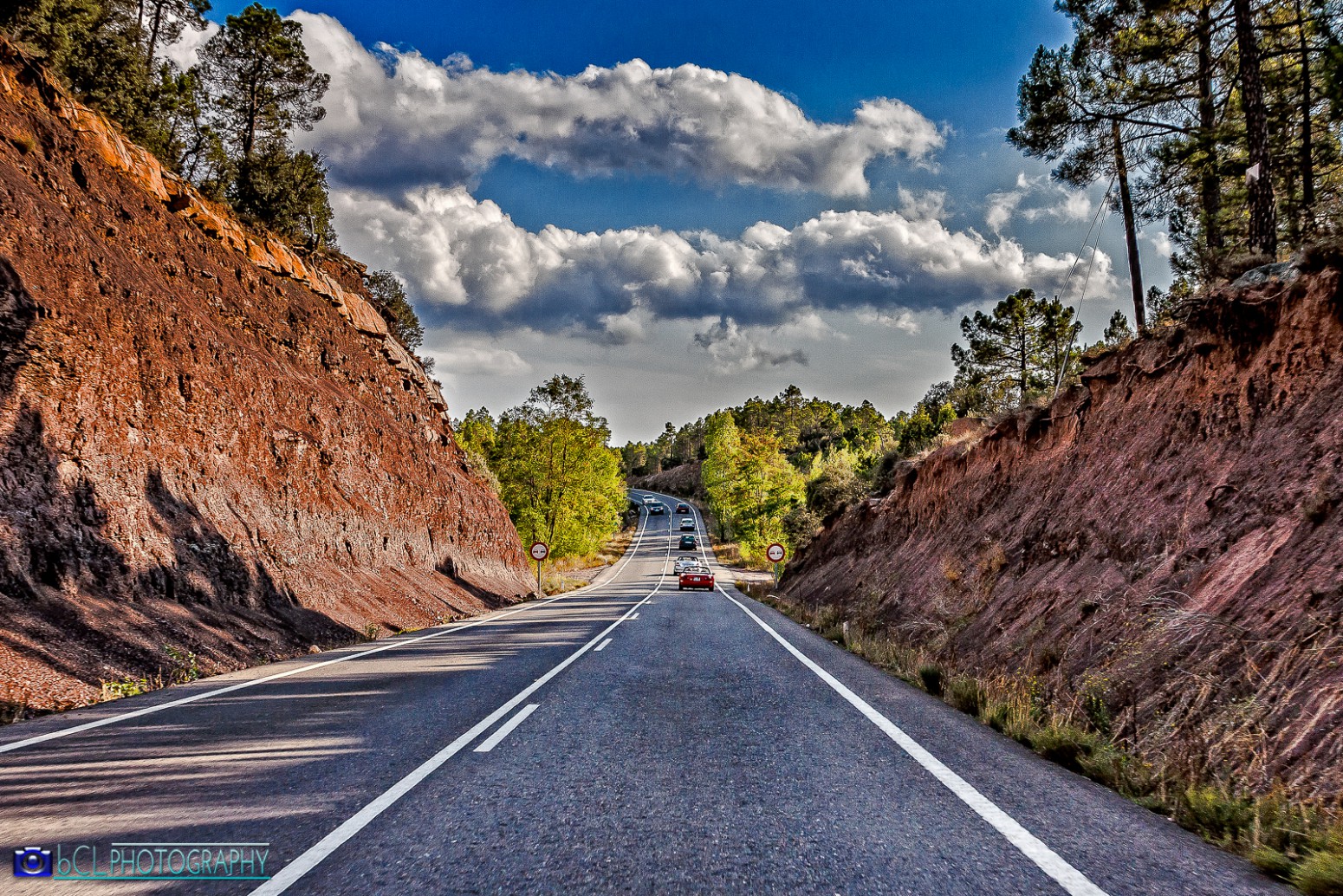

On the way to Teruel
Weekly Photo Challenge: On the Way
This is my entry to this week topic. It’s a photography taken on the way to Teruel, a small town located in eastern Spain.
The long straight and the wonderful sky caught my attention. I hope you like it too.
On The Way Home
On The Way Home
I saw myself bursting
with light in a town so
small, and in that moment
i wanted to photograph my
soul.
(c) Brooke Otto 2013


Broken
This is my contribution this week to the Weekly Photo Challenge. My personal interpretation on the topic of this week.
This is a photography taken in a paper factory in ruins.
Ruins
Dust and rubble settle at my feet,
A chaotic collapse
Inside myself that I could never
Have imagined,
The foundations are shaken,
The cracks began to show,
And piece by piece
It all spectacularly fell apart,
Nothing to hold on to,
Nothing to steady myself with
As it all crashed and burned,
Leaving me surrounded by the ruins
Of an Empire that took years to build
And seconds to destroy.
by LJ Chaplin


Enveloped: by a huge photo
 This building was enveloped during a work by a huge picture of some models. A big announcement in fashion covering its body…
This is my contribution this week to the Weekly Photo Challenge. I think it is another interpretation to the concept of this week “enveloped”.

Forces of Nature
Water that flows on the Earth’s surface in streams, rivers and seas, is the most powerful natural agent operating on the surface, and changes the face of the Earth.
Waves, generated by storms, wind, or fast moving motor craft, cause coastal erosion, which may take the form of long-term losses of sediment and rocks, or merely the temporary redistribution of coastal sediments; erosion in one location may result in accretion nearby.
In these photos, taken on the island of Mallorca, we see how the water, repeatedly hitting on this rock, will slowly erode its base and and over time will break.

Forces of Nature


Intricate. Embroidered Indian Tapestry
This Embroidered Indian Tapestry has been suggested to me the idea of intricate and so I present to the Weekly Photo Challenge.
There are lots of Indian tapestries of all sizes with extensive embellishments. These tapestries are hand made by Indian artisans and used fot wall hanging decoration. They use vibrant colors of rural India, sometimes embellished with glittering antique mirrors.
Location and lighting are factors to consider with vintage patchwork Indian Tapestries.
This gorgeous & exquisite Tapestry has intricate & heavy “Banjara” hand embroidery in various colors . So extensive & intricate is the work that the package weight of this tapestry is more than 5 lbs!

Indian trapestry. Detail


Walking down the street

Walking down the street
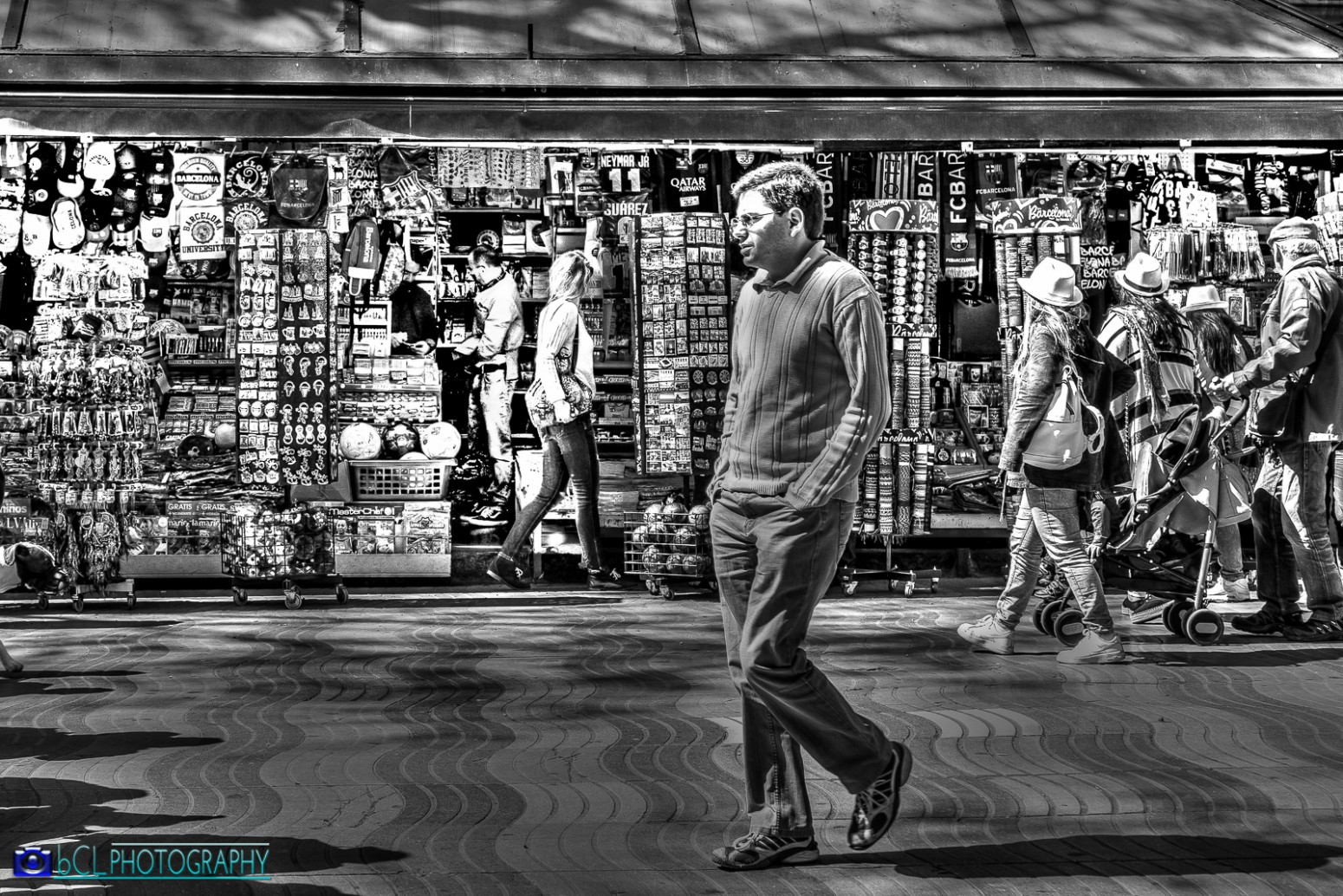
I have posted two different versions of each photo, the second is a monochrome HDR. Photos with high dynamic range give a different view of the same scene that sometimes makes them very interesting.
The images were taken in La Rambla. Barcelona

Walking down the street
Walking down the street

Bullfight in Seville
Bullfight in a farmhouse near Seville captured in April during festivals in the city. Naturally, I tried not to get too close. Each of these animals weights more than 500 kilograms (half a ton) and this day they do not seem very friendly …
As can be seen the fight get up enough dust …
The Spanish Fighting Bull (Toro Bravo) is an Iberian heterogeneous cattle population. It is primarily bred free-range on extensive estates in Spain, Portugal and Latin American countries where bull fighting is organized. Fighting bulls are selected primarily for a certain combination of aggression, energy, strength, and stamina.
As I said in another post I do not like bullfighting, fortunately prohibited by popular demand in Catalonia.
More info about the Spanish Fighting Bull in Wikipedia
Post for the Weekly Photo Challenge: Motion





















 bCL Photography