

Looking for the next photo
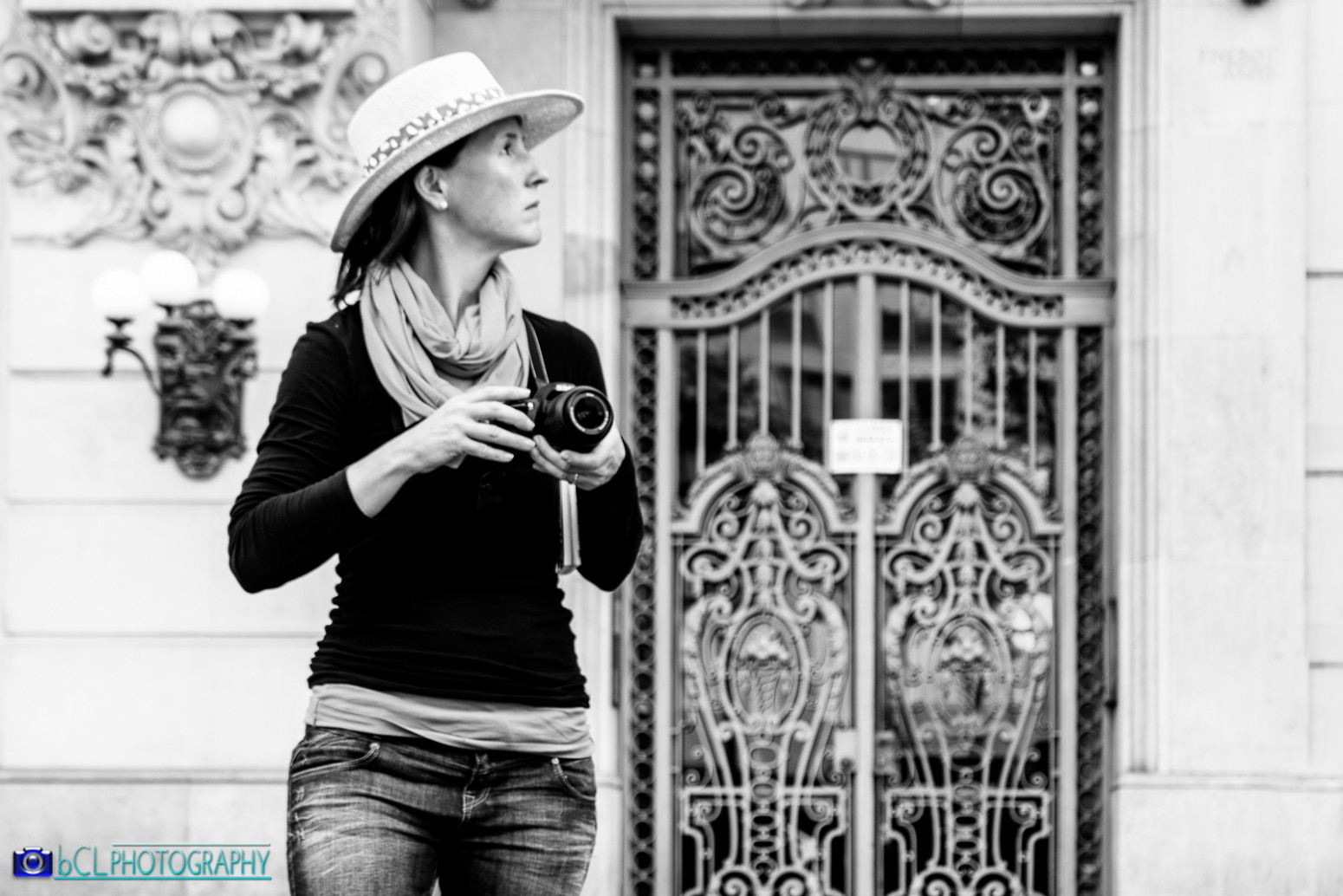
 “I never shot on sets, but if I was traveling somewhere or on location, I would always have my camera, and I’d always be – it’s that kind of fly on the wall approach to photography, though. I don’t engage the subject. I like to sneak around, skulk about in the dark.”


Thames under bridge
A contribution to the Leanne Cole Photography MM 2-12: Monochrome Madness 2-12.
Thames is best known for flowing through London, but the river also flows alongside other towns and cities, like Oxford, Reading, Henley-on-Thames, and Windsor. This foto is taken in London. Some day I’d like to flow all the river.
The River’s Tale (prehistoric)
TWENTY bridges from Tower to Kew –
Wanted to know what the River knew,
Twenty Bridges or twenty-two,
For they were young, and the Thames was old
And this is the tale that River told…
If you want the whole tale, read it at The Kipling Society


sewing machine needle
 Today I begin a new series (this allows me to be better organized.). I’ll start to put regularly (weekly if it is possible) photos about machines or parts of them. “Machinery” will be the subject.
ma·chin·er·y
Machine (mechanical)
Machines employ power to achieve desired forces and movement (motion). A machine has a power source and actuators that generate forces and movement, and a system of mechanisms that shape the actuator input to achieve a specific application of output forces and movement. Modern machines often include computers and sensors that monitor performance and plan movement, and are called mechanical systems.
The meaning of the word “machine” is traced by the Oxford English Dictionary to an independently functioning structure and by Merriam-Webster Dictionary[2] to something that has been constructed. This includes human design into the meaning of machine.
The adjective “mechanical” refers to skill in the practical application of an art or science, as well as relating to or caused by movement, physical forces, properties or agents such as is dealt with by mechanics. Similarly Merriam-Webster Dictionary defines “mechanical” as relating to machinery or tools.
Power flow through a machine provides a way to understand the performance of devices ranging from levers and gear trains to automobiles and robotic systems. The German mechanician Franz Reuleaux wrote “a machine is a combination of resistant bodies so arranged that by their means the mechanical forces of nature can be compelled to do work accompanied by certain determinate motion.” Notice that forces and motion combine to define power.
More recently, Uicker et al. stated that a machine is “a device for applying power or changing its direction.” And McCarthy and Soh describe a machine as a system that “generally consists of a power source and a mechanism for the controlled use of this power.”
From Wikipedia, the free encyclopedia

sewing machine needle
A sewing machine needle consists of:
- shank – clamped by the sewing machine’s needle holder
- shoulder – where the thick shank tapers down to the shaft
- shaft – a length suitable for driving the eye and thread through the material and down to the bobbin
- groove – cut in the back of the shaft to release the thread into a loop that aids the hook or shuttle to pick up the thread
- scarf – provides extra room for the hook or shuttle to pass close by
- eye – carries the thread
- point – penetrates the material by either parting the threads or cutting a hole in the fabric
The majority of sewing machine needles are made of various grades of hardened chrome-plated steel, though certain specialty needles are coated with titanium rather than chrome.
From Wikipedia, the free encyclopedia

sewing machine needle


The 4 Cats
 Here is my entry for Norm’s Thursday Doors Challenge. Thanks Norm for hosting this challenge.
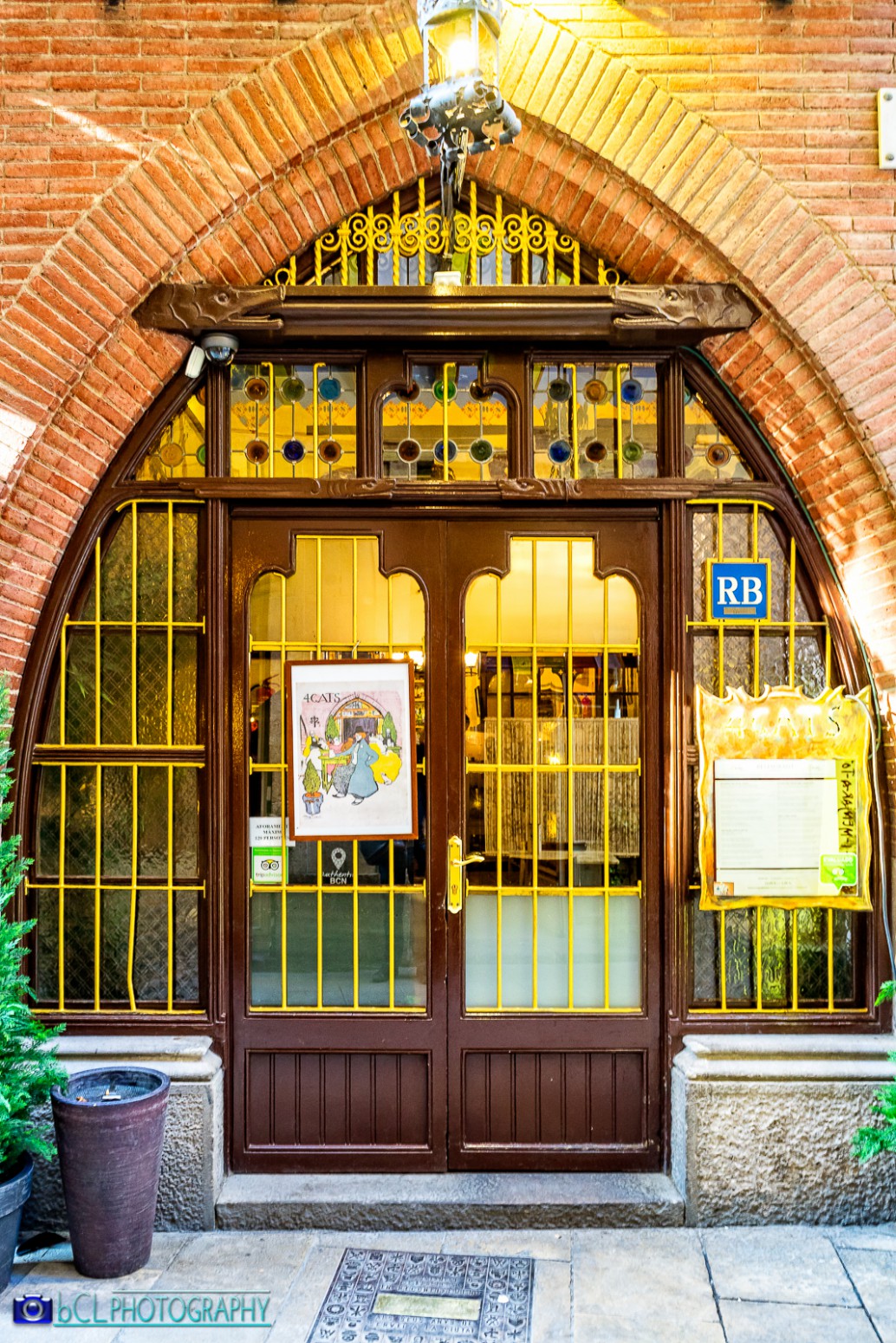
This is one of the six doors found in the bar restaurant The Four Cats (cat, Els Quatre Gats) in the street Carrer de Montsió, 3 (Barcelona)
Els Quatre Gats (The Four Cats), often written Els 4 Gats, was a café in Barcelona (Catalonia) which opened on 12 June 1897. It also operated as a hostel, a cabaret, a pub and a restaurant. Active until 1903, Els Quatre Gats became one of the main centers of Modernisme in Barcelona. The artist Ramon Casas i Carbó largely financed this bar on the ground floor of Casa Martí (1896), a building by the architect Josep Puig i Cadafalch in Carrer Montsió near the center of Barcelona. Els Quatre Gats was reconstructed in 1978.
Pablo Picasso visited this pub–restaurant often in his early art career.
The 4 Cats
“Four Cats” is a colloquial Catalan expression for “only a few people” and the name of Els Quatre Gats is derived from this saying. The four founders of the café—Pere Romeu, Santiago Rusiñol, Ramon Casas, and Miguel Utrillo—also chose this name as a tribute to Le Chat Noir, “The Black Cat,” a celebrated Parisian café whose creator, Rodolphe Salis, had recently died. They modeled Els Quatre Gats largely after the Parisian café.
More info in Wikipedia.

The 4 Cats
The 4 Cats. Entrance:
The 4 Cats. Entrance


Old street Vielha (Val d’Aran)
This is my contribution to the Cee’s Which Way Challenge. Thanks you Cee for hosting this challenge.
My entry this week is for this old street in a small town in the Pyrenees mountains.
Vielha e Mijaran is a municipality in the comarca of the Val d’Aran in Catalonia, Spain. It was created in 1970 by the merger of the municipalities of Arròs e Vila, Betlan, Escunhau, Gausac, Vielha and Vilac: the former municipalities retain some privileges as “decentralised municipal entities” (entitats municipals descentralitzades, EMD), as does the village of Betren. Mijaran literally means “Middle Valley” in Aranese, as the inhabited part of the municipality is situated in the valley of the Garonne (Garona). The Noguera Ribagorçana has its source on the territory of the municipality, on the opposite side of the watershed. The ajuntament (town hall) is in Vielha, spelled Viella in Catalan and Spanish, which is also the capital of the comarca.
The municipality is linked to France and to the rest of Catalonia (via the Vielha tunnel) by the N-230 road. The C-28 (old name: C-142) road continues up the valley to Naut Aran, and on over the Port de la Bonaigua(2,072 m) to the comarca of Pallars Sobirà. This road, the higher stretches of which are impassable in winter, was the only route between the Val d’Aran and the rest of Spain before the opening of the Vielha tunnel in 1948.

Pyrenees
Famous for the sky sports in winter and rural tourisme in summer.
The Val d’Aran, Aran Valley in English, is a valley, 620.47 square kilometres (239.56 sq mi) in area, in the Pyrenees mountains and a comarca (county) in the northwestern part of the province of Lleida, in Catalonia, northern Spain. Most of the valley constitutes one of only two areas of Spain, and the only part of Catalonia, located on the northern side of the Pyrenees.


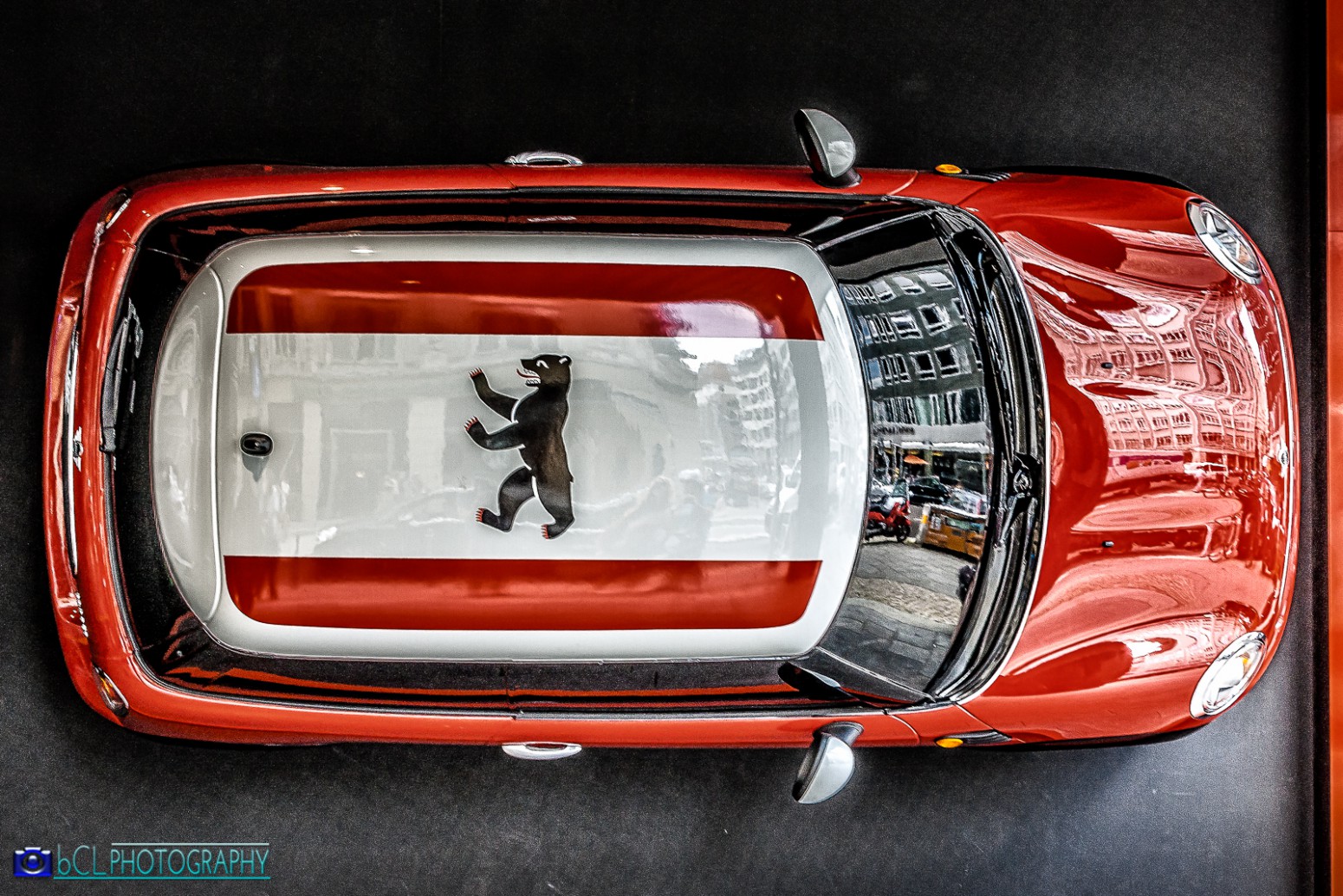
The car on the wall.
 This is my contribution to Cee’s Fun Foto Challenge week’s topic: Perspective (Unusual angle or point of view).
The car was hanged on the wall of a shop in Berlin. I don’t usually see cars in this surprising position!, it was a funny situation and deserved to make a couple of photos. Two perspectives, the second reveals clearly the car position on the wall. I hope you like it.

The car on the wall. Another perspective.


Broken
This is my contribution this week to the Weekly Photo Challenge. My personal interpretation on the topic of this week.
This is a photography taken in a paper factory in ruins.
Ruins
Dust and rubble settle at my feet,
A chaotic collapse
Inside myself that I could never
Have imagined,
The foundations are shaken,
The cracks began to show,
And piece by piece
It all spectacularly fell apart,
Nothing to hold on to,
Nothing to steady myself with
As it all crashed and burned,
Leaving me surrounded by the ruins
Of an Empire that took years to build
And seconds to destroy.
by LJ Chaplin


Walking down the Street
 Mondays: Walking down the street
Starting last week this series of photographs devoted mainly to people who wander the cities, people who like to walk, needs it or want to help the environment moving around on foot.
It’s also a small homage to all who walk to be more agile, stronger and healthier, although they are in cities full of cars…or because of it..
Each monday I will continue publishing a photo on this topic. Thanks for patience…

Walking down the Street
Today three variations: the first photo is showing one of the stardard simple editing (minor retouching). The second one shows a different, a bit more creative and risky version. The third is a B&W.
I encourage you to do a small survey as usual, Which do you prefer? Why?
Location: Madrid, Puerta del Sol.

Walking down the street


Fair time
The big wheel turns without stopping
lighting up the night,
enlightening people,
illuminating their lives,
in the meantime it last the Fair
Seville, April Fair


Dog digging under the table
This surprising photo was taken in an interesting store, Vinçon, in the Passeig de Gràcia in Barcelona. It deserves a visit.
1941 Vinçon opens its doors to the public
In 1941 Enrique Levi and Hugo Vinçon founded their first shop in Paseo de Gracia named Enrique Levi, which was later changed to Regalos Hugo Vinçon.
Ties between the Amat family and the business began a year later when Jacinto Amat was hired as a sales assistant.
1973 La Sala Vinçon opening
Since this space was opened works of artist, architects and designers from all around the world are displayed.
1995 The national design prize
Vinçon has been awarded significant prizes over the years.
1997 Online shop
Vinçon acquired the http://www.vincon.com domain although we did not launch the website until mid 1998. The design concept was kept simple and functional and has evolved over the years to the point of becoming Vinçon’s second shop.
More info about this store here.

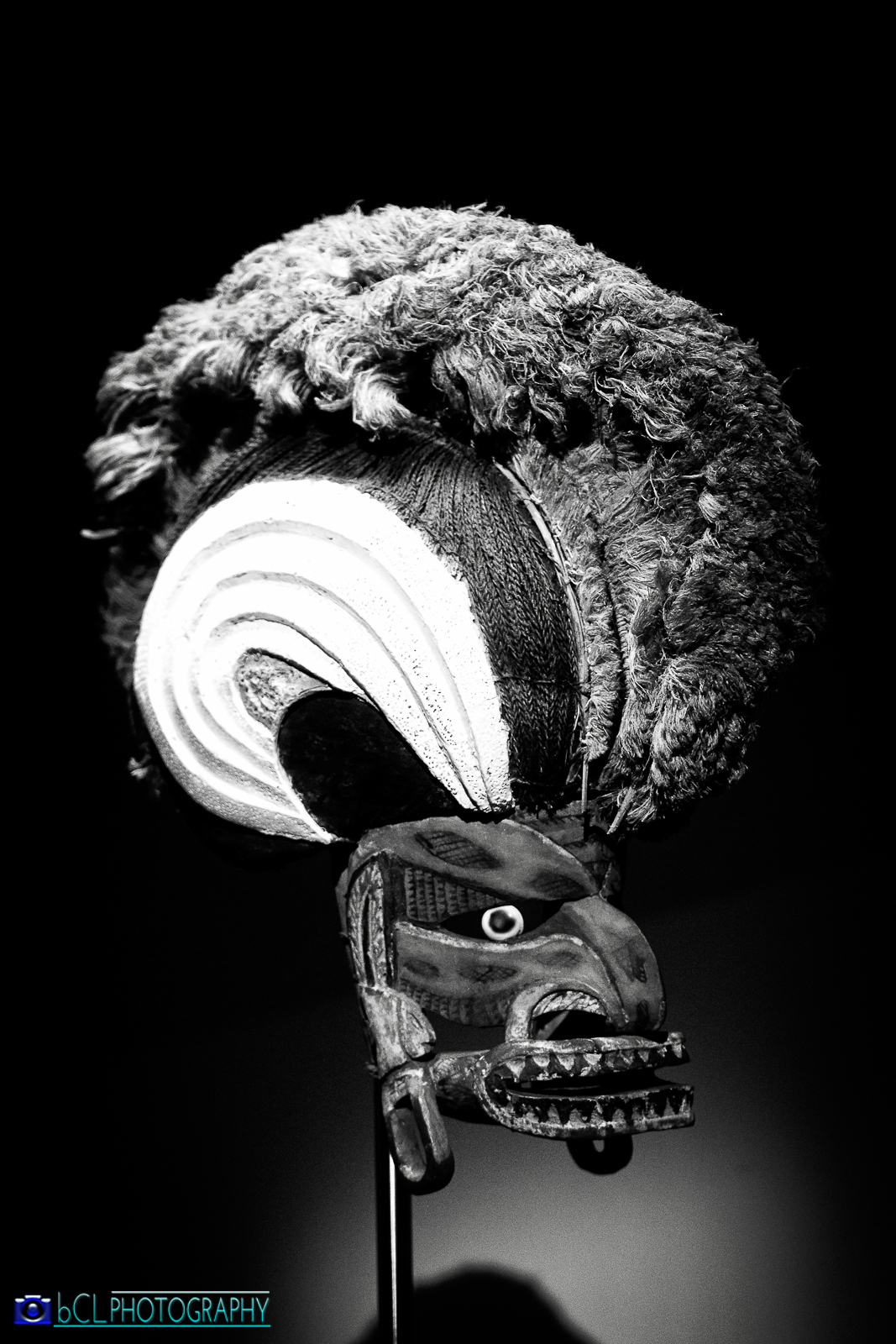
Tatanua head
 This is my entry for the Cee’s Black & White Challenge: Heads or Facial Features. Thanks Cee for hosting this challenge.
Tatanua masks are one of the most representative artistic representations of New Ireland (Pacific Ocean). It is decorated to represent hairstyle wearing young men as a mark of mourning, in which the hair was partially shaved and covered with lime. Each side of the ridge is decorated differently using shells, feathers, wool, seeds and pieces of wood. The crest is usually made with coconut fiber.
Materials: wood (carved polychrome), fiber, cloth, shell.
Late nineteenth century.
Seen in the Folch collection. Museu de Cultures del Món (Museum of World Cultures). Barcelona


door
Here is my entry for Norm’s Thursday Doors Challenge. Thanks Norm for hosting this challenge.
Doors seen in a little town near Barcelona called Rupit. I’ve already post some things about this town. The first one has the owner’s family name up the door.
Interestingly, the painted wooden door has different thicknesses of paint, ranging from more to less as we approach the ground…
The second door is from the same town, but but more recently painted.

door

















 bCL Photography