



Two young men and a dog. Berlin
 Last mondays, I’ve posted some photos under the topic “Walking down the street”. After long meditation, I’ve decided to change the topic to a more general one “Street Photo“.
Street photography is as old as the photography itself.
“Street photography is photography that features the human condition within public places. Street photo does not necessitate the presence of a street or even the urban environment. Though people usually feature directly, street photography might be absent of people and can be an object or environment where the image projects a decidedly human character in facsimile or aesthetic.” Wikipedia
One important feature is that the photography must not to be prepared, the photo should be spontaneous. (This alone could lead to a broad discussion…).
Next weeks we will talk more about this interesting topic.
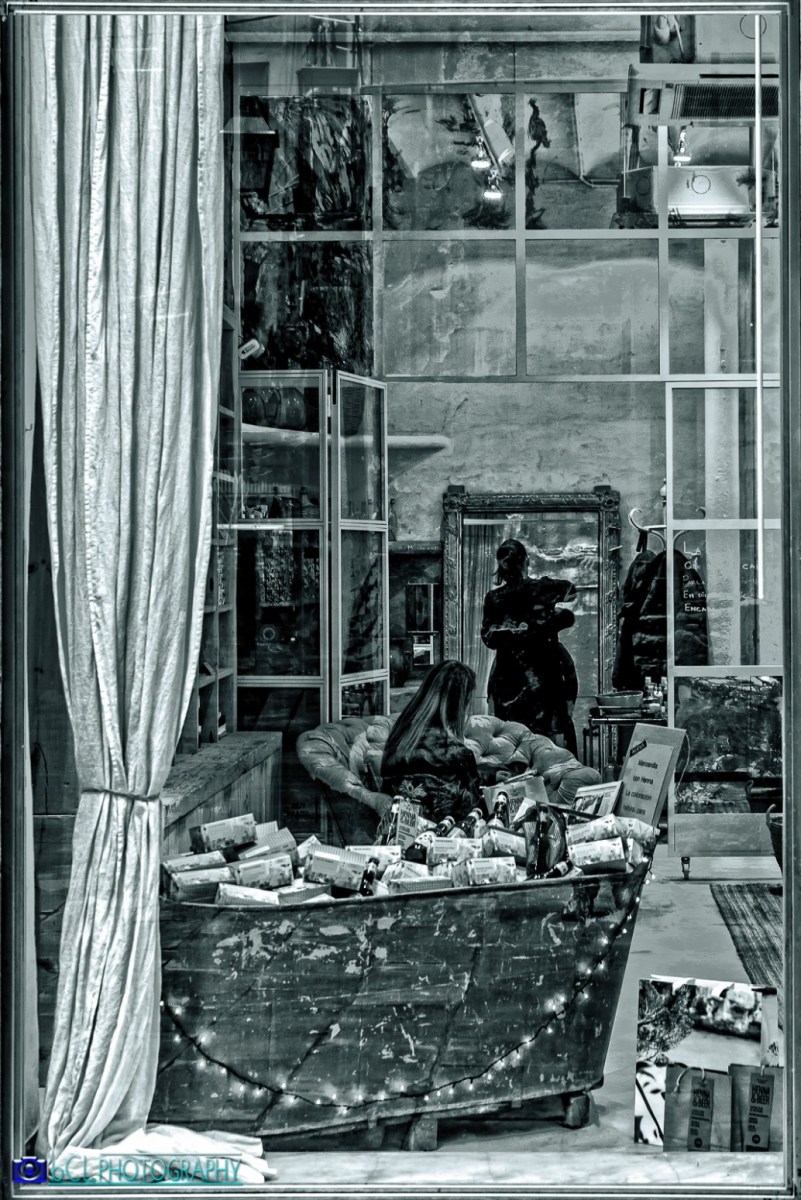

Behind the Window
 Behind the Window
I look out the window to see anyone…
hoping to see someone,
but there are only two women,
two women who do not pay attention to me.
They ignore me…
Nobody is going to pay attention,
nobody but myself.
I shot the photo and leave.
bCL Photography 2015

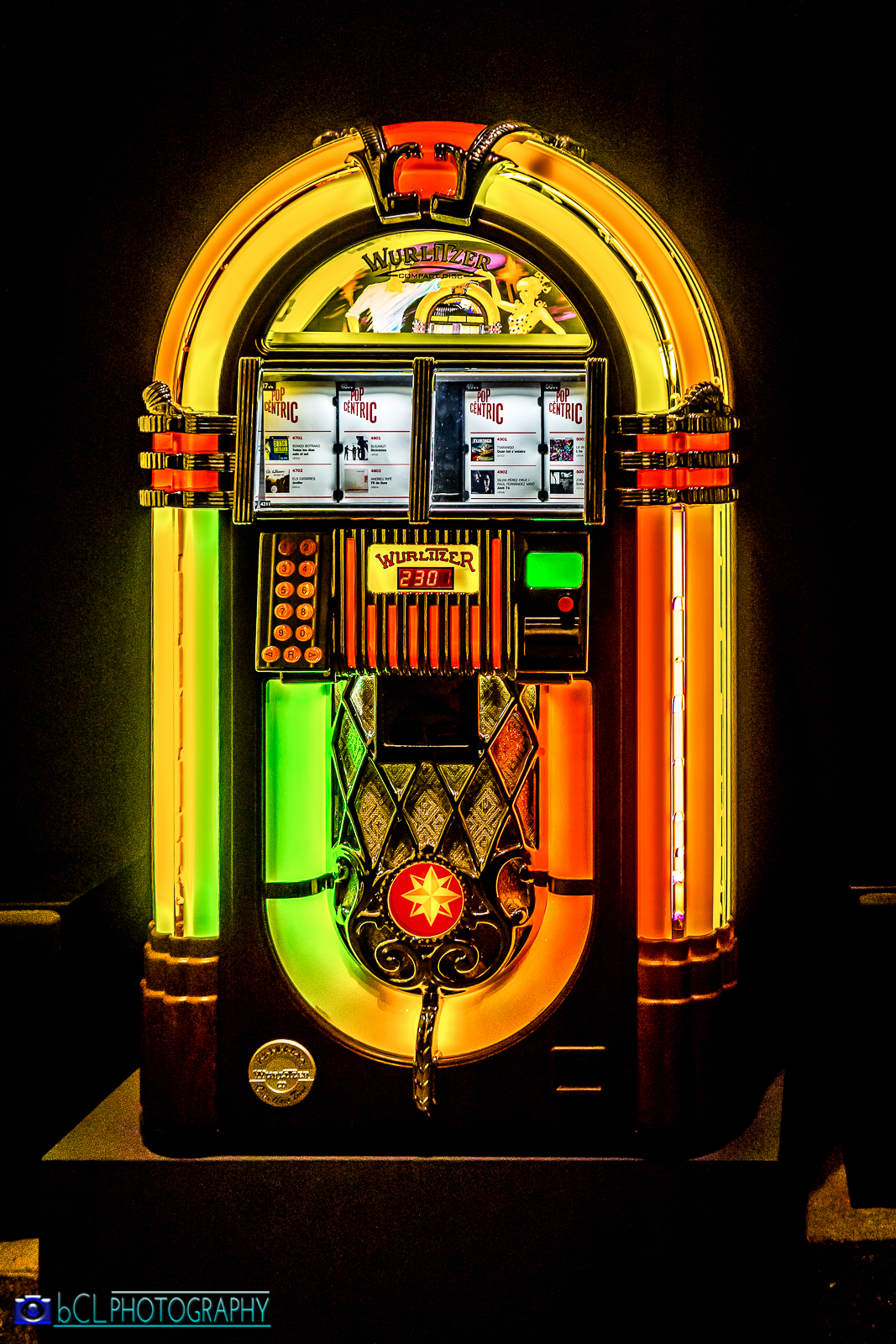
Jukebox Wurlitzer
Weekly Photo Challenge: Vivid
This is my entry to this week topic: the Jukebox
A jukebox is a partially automated music-playing device, usually a coin-operated machine, that will play a patron’s selection from self-contained media. The classic jukebox has buttons with letters and numbers on them that, when entered in combination, are used to play a specific selection.
Coin-operated music boxes and player pianos were the first forms of automated coin-operated musical devices. These instruments used paper rolls, metal disks, or metal cylinders to play a musical selection on the instrument, or instruments, enclosed within the device. In the 1890s these devices were joined by machines which used actual recordings instead of physical instruments. In 1890, Louis Glass and William S. Arnold invented the nickel-in-the-slot phonograph, the first of which was an Edison Class M Electric Phonograph retrofitted with a device patented under the name of Coin Actuated Attachment for Phonograph. The music was heard via one of four listening tubes.
Early designs, upon receiving a coin, unlocked the mechanism, allowing the listener to turn a crank that simultaneously wound the spring motor and placed the reproducer’s stylus in the starting groove. Frequently, exhibitors would equip many of these machines with listening tubes (acoustic headphones) and array them in “phonograph parlors”, allowing the patron to select between multiple records, each played on its own machine. Some machines even contained carousels and other mechanisms for playing multiple records. Most machines were capable of holding only one musical selection, the automation coming from the ability to play that one selection at will. In 1918 Hobart C. Niblack patented an apparatus that automatically changed records, leading to one of the first selective jukeboxes being introduced in 1927 by the Automated Musical Instrument Company, later known as AMI.
Greater levels of automation were gradually introduced. As electrical recording and amplification improved there was increased demand for coin-operated phonographs.
The term jukebox came into use in the United States beginning in 1940, apparently derived from the familiar usage “juke joint”, derived from the Gullah word “juke” or “joog” meaning disorderly, rowdy, or wicked.
Song-popularity counters told the owner of the machine the number of times each record was played (A and B side were generally not distinguished), with the result that popular records remained, while lesser-played songs could be replaced.
Initially playing music recorded on wax cylinders, the shellac 78 rpm record dominated jukeboxes in the early part of the 20th century. The Seeburg Corporation introduced an all 45 rpm vinyl record jukebox in 1950; since the 45s were smaller and lighter, they soon became the dominant jukebox media for the last half of the 20th century. 33⅓-R.P.M., C.D.s, and videos on DVDs were all introduced and used in the last decades of the century. MP3 downloads, and Internet-connected media players came in at the start of the 21st century.
The jukebox’s history has followed the wave of technological improvements in music reproduction and distribution. With its large speaker size, facilitating low-frequency (rhythm) reproduction, and large amplifier, the jukebox played sound with higher quality and volume than the listener could in his or her home, sometimes music with a “beat”.
Jukeboxes were most popular from the 1940s through the mid-1960s, particularly during the 1950s. By the middle of the 1940s, three-quarters of the records produced in America went into jukeboxes. While often associated with early rock and roll music, their popularity extends back much earlier, including classical music, opera and the swing music era. In 1977, The Kinks recorded a song called “Jukebox Music” for their album Sleepwalker.
Styling progressed from the plain wooden boxes in the early thirties to beautiful light shows with marbelized plastic and color animation in the Wurlitzer 850 Peacock of 1941. But after the United States entered the war, metal and plastic were needed for the war effort. Jukeboxes were considered “nonessential”, and none were produced until 1946. The 1942 Wurlitzer 950 featured wooden coin chutes to save on metal. At the end of the war, in 1946, jukebox production resumed and several “new” companies joined the fray. Jukeboxes started to offer visual attractions: bubbles, waves, circles of changing color which came on when a sound was played.
Models designed and produced in the late 20th century needed more panel space for the increased number of record titles they needed to present for selection, reducing the space available for decoration, leading to less ornate styling in favor of functionality and less maintenance.
Many manufacturers produced jukeboxes, including 1890s Wurlitzer, 1920s Seeburg, 1930s “Rock-Ola” whose name is actually based on that of the company founder, David Cullen Rockola, and Crosley.
In 1946, the Wurlitzer Model 1015 – referred to as the “1015 bubbler” offered 24 selections. More than 56,000 were sold in less than 2 years and it is considered a pop culture icon. Designed by Wurlitzer’s Paul Fuller.
More info: Wikipedia


Güell Palace
Thursday Doors Challenge
The Palau Güell (Güell Palace) is a mansion designed by the architect Antoni Gaudí for the industrial tycoon Eusebi Güell, and built between 1886 and 1888. It is situated in the Carrer Nou de la Rambla, in the El Raval neighbourhood of the city of Barcelona in Catalonia. It is part of the UNESCO World Heritage Site “Works of Antoni Gaudí” since 1984.
The home is centered on a main room for entertaining high society guests. Guests entered the home in horse-drawn carriages through the front iron gates, which featured a parabolic arch and intricate patterns of forged iron-work resembling seaweed and in some parts a horsewhip. Animals could be taken down a ramp and kept in the livery stable in the basement where the servants resided, while the guests went up the stairs to the receiving room. The ornate walls and ceilings of the receiving room disguised small viewing windows high on the walls where the owners of the home could view their guests from the upper floor and get a ‘sneak peek’ before greeting them, in case they needed to adjust their attire accordingly.
The main party room has a high ceiling with small holes near the top where lanterns were hung at night from the outside to give the appearance of a starlit sky.
It was used in Antonioni‘s film The Passenger as a backdrop for the first meeting between Jack Nicholson and Maria Schneider.
In 2004, visits by the public were completely suspended due to renovations; some of the stone used in the original construction was weak and has cracked over the years causing structural problems within the building. As of 1 February 2008, Palau Güell was partially reopened to the public, with access to limited parts of the building only. It is currently completely open with all restoration work completed in April 2011.
More info: WIkipedia
This is my entry for Norm’s Thursday Doors Challenge. Thanks Norm for hosting this challenge.
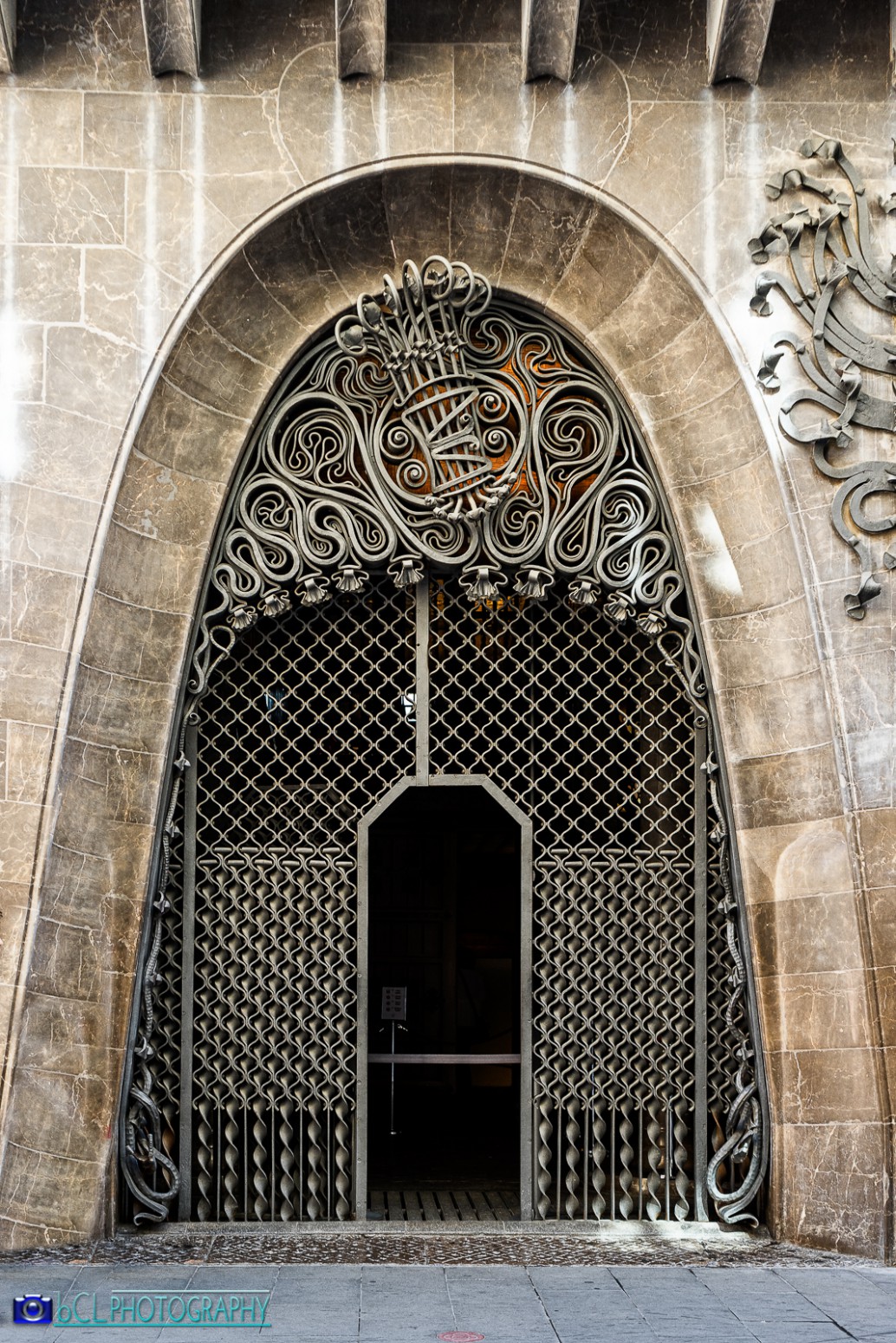
Güell Palace


Shopping time
Mondays: Walking down the street
As every Monday, we return to the theme of “walking down the street”.
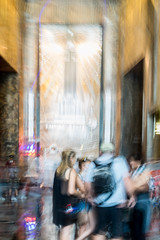
This week with the title of “Shopping time”, I upload this picture of people shopping in Madrid.
People appear somewhat blurred, probably due to the rush to buy.


Thames under bridge
A contribution to the Leanne Cole Photography MM 2-12: Monochrome Madness 2-12.
Thames is best known for flowing through London, but the river also flows alongside other towns and cities, like Oxford, Reading, Henley-on-Thames, and Windsor. This foto is taken in London. Some day I’d like to flow all the river.
The River’s Tale (prehistoric)
TWENTY bridges from Tower to Kew –
Wanted to know what the River knew,
Twenty Bridges or twenty-two,
For they were young, and the Thames was old
And this is the tale that River told…
If you want the whole tale, read it at The Kipling Society


The 4 Cats
Here is my entry for Norm’s Thursday Doors Challenge. Thanks Norm for hosting this challenge.
This is one of the six doors found in the bar restaurant The Four Cats (cat, Els Quatre Gats) in the street Carrer de Montsió, 3 (Barcelona)
Els Quatre Gats (The Four Cats), often written Els 4 Gats, was a café in Barcelona (Catalonia) which opened on 12 June 1897. It also operated as a hostel, a cabaret, a pub and a restaurant. Active until 1903, Els Quatre Gats became one of the main centers of Modernisme in Barcelona. The artist Ramon Casas i Carbó largely financed this bar on the ground floor of Casa Martí (1896), a building by the architect Josep Puig i Cadafalch in Carrer Montsió near the center of Barcelona. Els Quatre Gats was reconstructed in 1978.
Pablo Picasso visited this pub–restaurant often in his early art career.
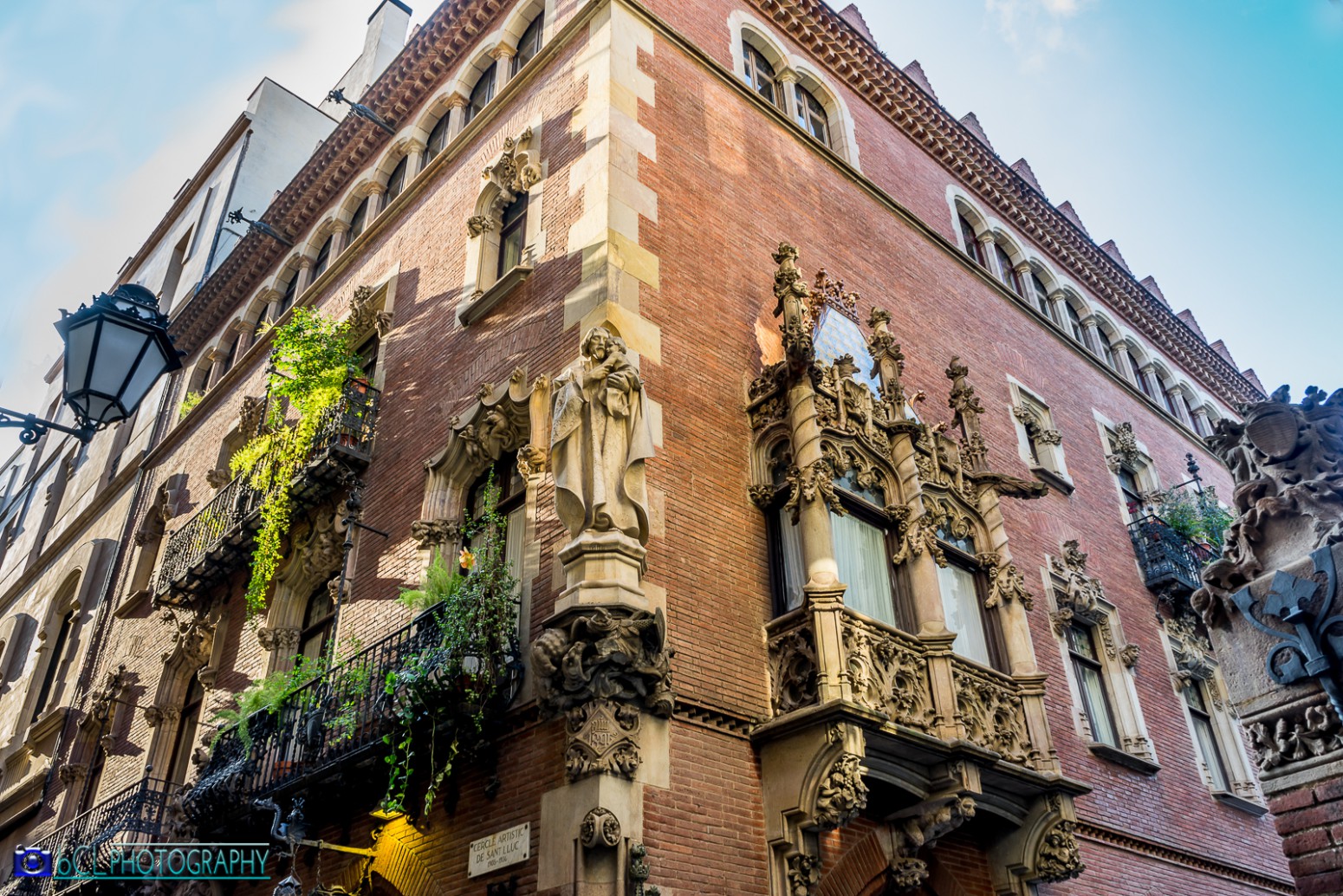
The 4 Cats
“Four Cats” is a colloquial Catalan expression for “only a few people” and the name of Els Quatre Gats is derived from this saying. The four founders of the café—Pere Romeu, Santiago Rusiñol, Ramon Casas, and Miguel Utrillo—also chose this name as a tribute to Le Chat Noir, “The Black Cat,” a celebrated Parisian café whose creator, Rodolphe Salis, had recently died. They modeled Els Quatre Gats largely after the Parisian café.
More info in Wikipedia.

The 4 Cats
The 4 Cats. Entrance:
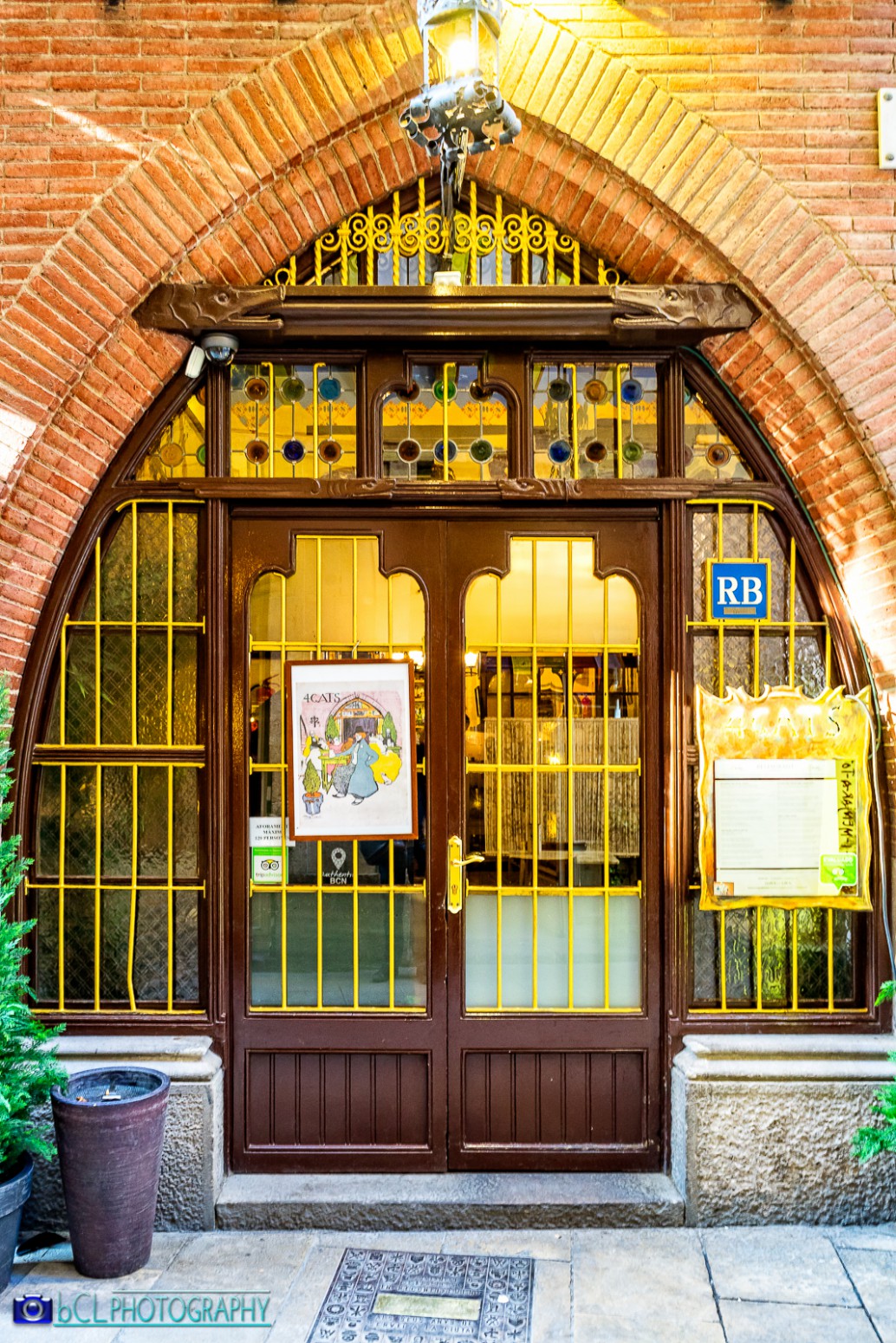
The 4 Cats. Entrance

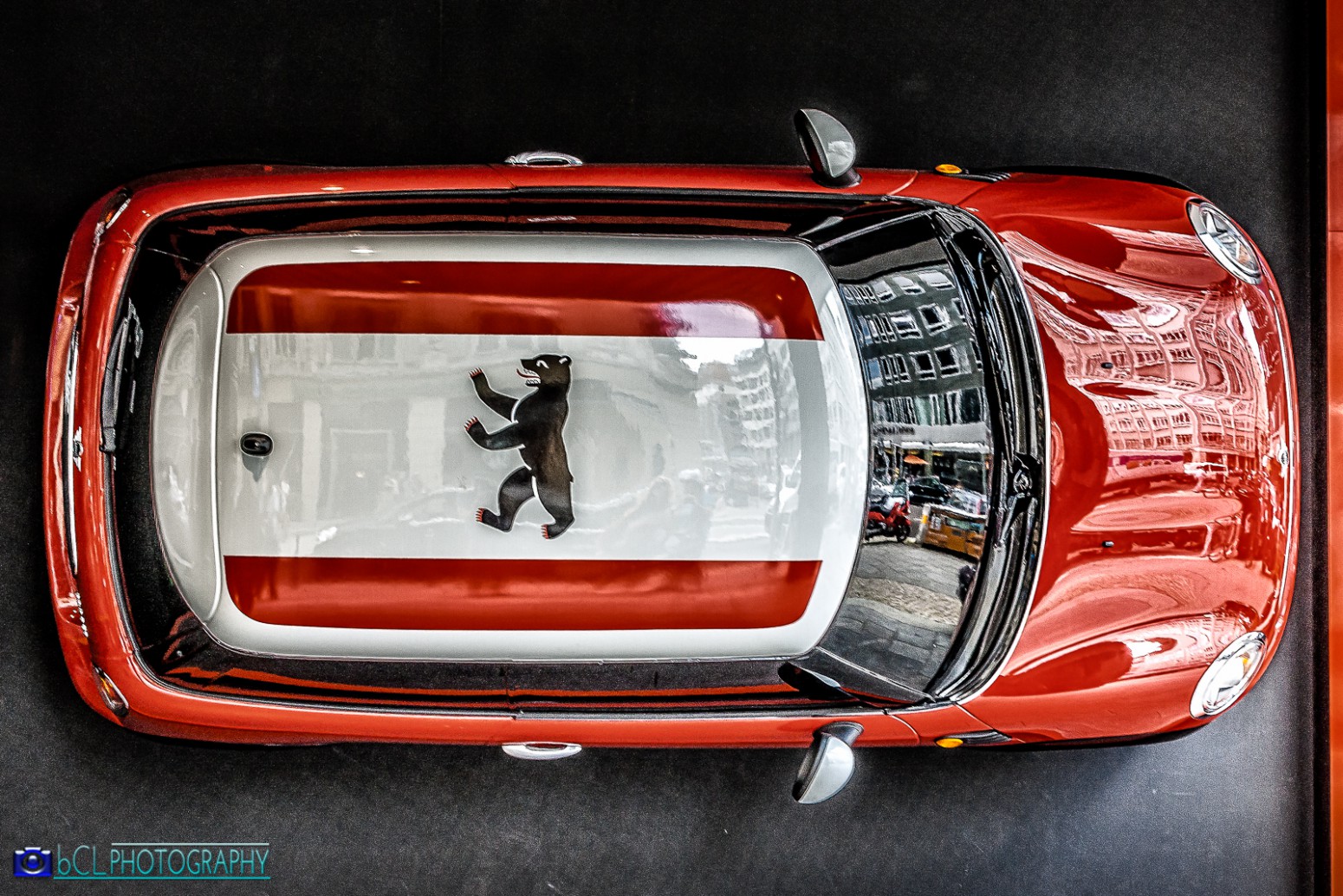
The car on the wall.
 This is my contribution to Cee’s Fun Foto Challenge week’s topic: Perspective (Unusual angle or point of view).
The car was hanged on the wall of a shop in Berlin. I don’t usually see cars in this surprising position!, it was a funny situation and deserved to make a couple of photos. Two perspectives, the second reveals clearly the car position on the wall. I hope you like it.

The car on the wall. Another perspective.


Walking down the Street
Mondays: Walking down the street
Starting last week this series of photographs devoted mainly to people who wander the cities, people who like to walk, needs it or want to help the environment moving around on foot.
It’s also a small homage to all who walk to be more agile, stronger and healthier, although they are in cities full of cars…or because of it..
Each monday I will continue publishing a photo on this topic. Thanks for patience…

Walking down the Street
Today three variations: the first photo is showing one of the stardard simple editing (minor retouching). The second one shows a different, a bit more creative and risky version. The third is a B&W.
I encourage you to do a small survey as usual, Which do you prefer? Why?
Location: Madrid, Puerta del Sol.

Walking down the street


Fair time
The big wheel turns without stopping
lighting up the night,
enlightening people,
illuminating their lives,
in the meantime it last the Fair
Seville, April Fair


Dog digging under the table
This surprising photo was taken in an interesting store, Vinçon, in the Passeig de Gràcia in Barcelona. It deserves a visit.
1941 Vinçon opens its doors to the public
In 1941 Enrique Levi and Hugo Vinçon founded their first shop in Paseo de Gracia named Enrique Levi, which was later changed to Regalos Hugo Vinçon.
Ties between the Amat family and the business began a year later when Jacinto Amat was hired as a sales assistant.
1973 La Sala Vinçon opening
Since this space was opened works of artist, architects and designers from all around the world are displayed.
1995 The national design prize
Vinçon has been awarded significant prizes over the years.
1997 Online shop
Vinçon acquired the http://www.vincon.com domain although we did not launch the website until mid 1998. The design concept was kept simple and functional and has evolved over the years to the point of becoming Vinçon’s second shop.
More info about this store here.


the bar
The B&W version:

the bar
Which one do you prefer??

















 bCL Photography