bCL Photography

Blog

Diocesan Museum of Barcelona

Diocesan Museum of Barcelona

DOORSThis incrediblely solid and heavy door belongs to the Diocesan Museum of Barcelona (next to the Cathedral).

This new museum’s doors were designed and made by the Catalan artist Josep Plandiura. The striking visual work done by Plandiura came under harsh criticism because of the contrast that existed between his abstract work and the gothic architecture of the Cathedral of Barcelona.

The door was made using weathering steel, best-known by the trademark Cor-Ten steel, a group of steel alloys which were developed to eliminate the need for painting, and form a stable rust-like appearance if exposed to the weather for several years.

The door, with organic and labyrinth form, measures 3.5 meters high by 2.6 wide.

This is my entry for Norm’s Thursday Doors Challenge.

Thanks Norm for hosting this challenge!!

Diocesan Museum of Barcelona

Diocesan Museum of Barcelona

I am called good man

I am called good man

street_photo_cmllI found this cute puppy in the streets of Brussels. Its owner was not there and he took care of their belongings and waited some charity while protecting from the sun with fashion sunglasses…a funny and quiet dog.

Half an hour later, the dog was in the same position, alone.
He moved only to groan slightly when someone gave him a few coins.

Dog is man’s best friend or not? Anyone doubts?

Dark landscape

Dark landscape

Dark Landscape

We turn to a different theme. Today I upload this picture of a bleak landscape, but relaxing at the same time.

This dark but interesting landscape has given me some moments of relax and peace. They are mountains of my country, Catalonia (north-east Spain).

I hope that you enjoy seeing them. as I did.

Kilo (kilogram)

Kilo (kilogram)

A contribution to the Leanne Cole Photography MM 2-13: K theme.

The kilogram or kilogramme (SI unit symbol: kg), is the base unit of mass in the International System of Units (SI) (the Metric system) and is defined as being equal to the mass of the International Prototype of the Kilogram (IPK).

The gram, 1/1000th of a kilogram, was originally defined in 1795 as the mass of one cubic centimeter of water at the melting point of water. The original prototype kilogram, manufactured in 1799 and from which the IPK is derived, had a mass equal to the mass of 1.000025 liters of water at 4 °C.

The kilogram is the only SI base unit with an SI prefix (“kilo”, symbol “k”) as part of its name.

More in Wikipedia

Street Photo

Two young men and a dog. Berlin

street_photo_cmllLast mondays, I’ve posted some photos under the topic “Walking down the street”. After long meditation, I’ve decided to change the topic to a more general one “Street Photo“.
Street photography is as old as the photography itself.
“Street photography is photography that features the human condition within public places. Street photo does not necessitate the presence of a street or even the urban environment. Though people usually feature directly, street photography might be absent of people and can be an object or environment where the image projects a decidedly human character in facsimile or aesthetic.” Wikipedia
One important feature is that the photography must not to be prepared, the photo should be spontaneous. (This alone could lead to a broad discussion…).

Next weeks we will talk more about this interesting topic.

Behind the Window

Behind the Window

street_photo_cmllBehind the Window

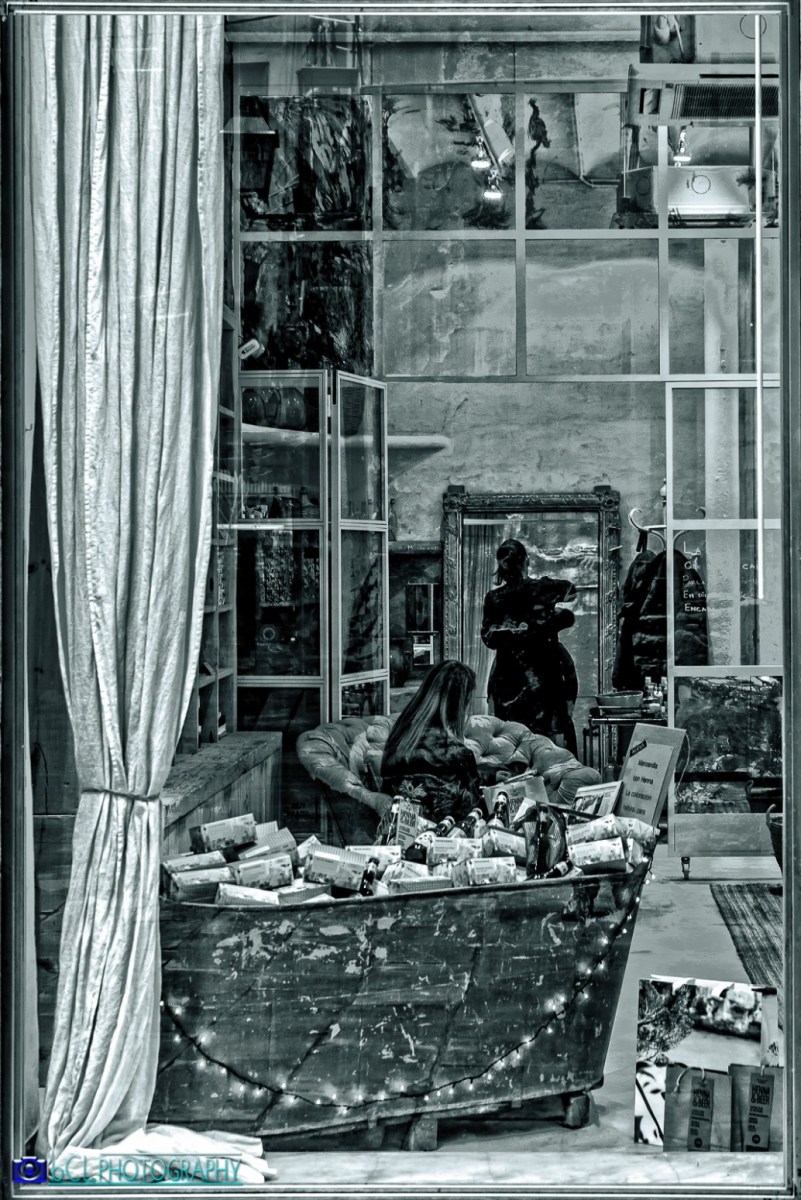
I look out the window to see anyone…
hoping to see someone,
but there are only two women,
two women who do not pay attention to me.
They ignore me…
Nobody is going to pay attention,
nobody but myself.
I shot the photo and leave.

bCL Photography 2015

Jukebox

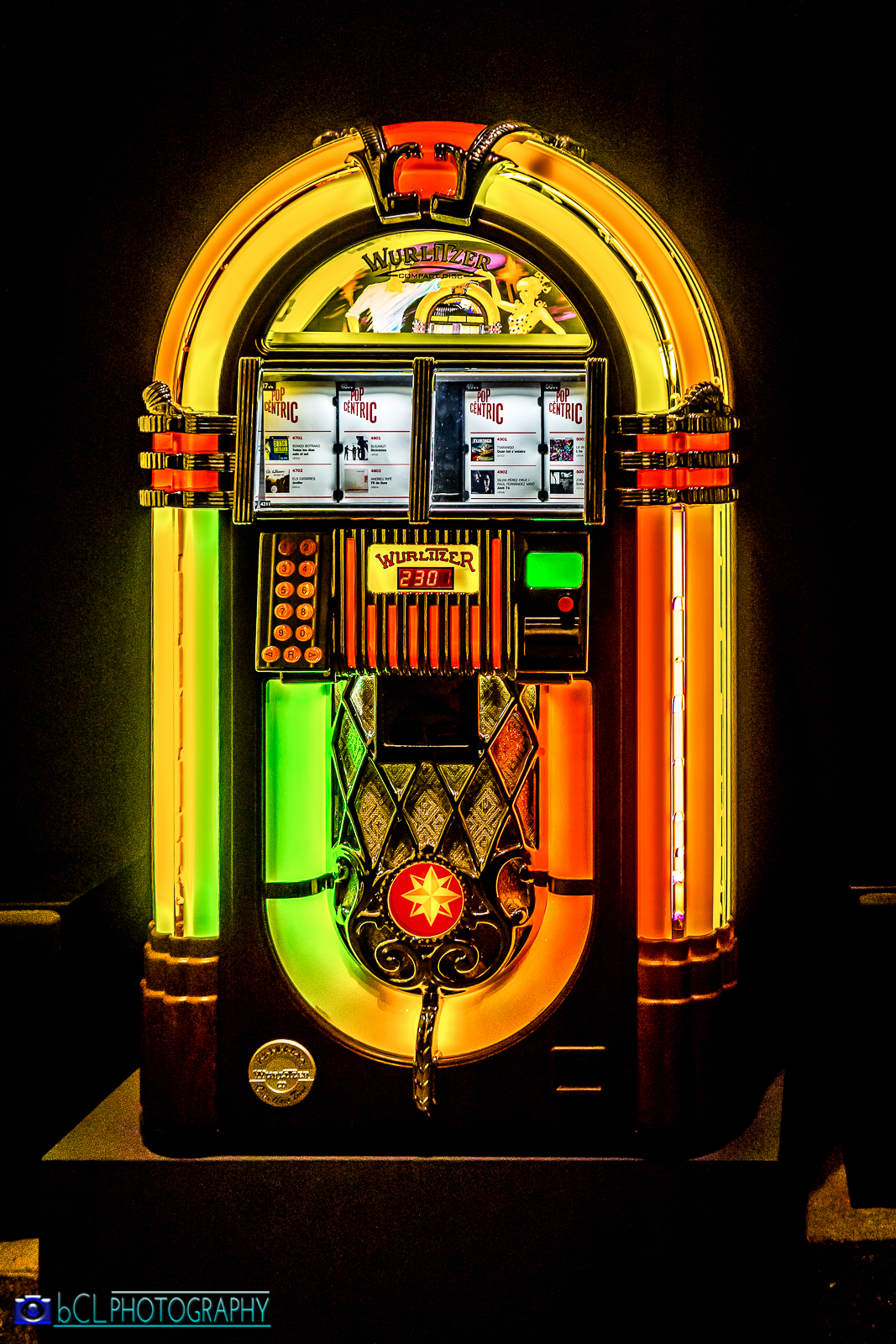
Jukebox Wurlitzer

A jukebox is a partially automated music-playing device, usually a coin-operated machine, that will play a patron’s selection from self-contained media. The classic jukebox has buttons with letters and numbers on them that, when entered in combination, are used to play a specific selection.

Coin-operated music boxes and player pianos were the first forms of automated coin-operated musical devices. These instruments used paper rolls, metal disks, or metal cylinders to play a musical selection on the instrument, or instruments, enclosed within the device. In the 1890s these devices were joined by machines which used actual recordings instead of physical instruments. In 1890, Louis Glass and William S. Arnold invented the nickel-in-the-slot phonograph, the first of which was an Edison Class M Electric Phonograph retrofitted with a device patented under the name of Coin Actuated Attachment for Phonograph. The music was heard via one of four listening tubes.

Early designs, upon receiving a coin, unlocked the mechanism, allowing the listener to turn a crank that simultaneously wound the spring motor and placed the reproducer’s stylus in the starting groove. Frequently, exhibitors would equip many of these machines with listening tubes (acoustic headphones) and array them in “phonograph parlors”, allowing the patron to select between multiple records, each played on its own machine. Some machines even contained carousels and other mechanisms for playing multiple records. Most machines were capable of holding only one musical selection, the automation coming from the ability to play that one selection at will. In 1918 Hobart C. Niblack patented an apparatus that automatically changed records, leading to one of the first selective jukeboxes being introduced in 1927 by the Automated Musical Instrument Company, later known as AMI.

Greater levels of automation were gradually introduced. As electrical recording and amplification improved there was increased demand for coin-operated phonographs.

The term jukebox came into use in the United States beginning in 1940, apparently derived from the familiar usage “juke joint”, derived from the Gullah word “juke” or “joog” meaning disorderly, rowdy, or wicked.

Song-popularity counters told the owner of the machine the number of times each record was played (A and B side were generally not distinguished), with the result that popular records remained, while lesser-played songs could be replaced.

Initially playing music recorded on wax cylinders, the shellac 78 rpm record dominated jukeboxes in the early part of the 20th century. The Seeburg Corporation introduced an all 45 rpm vinyl record jukebox in 1950; since the 45s were smaller and lighter, they soon became the dominant jukebox media for the last half of the 20th century. 33⅓-R.P.M., C.D.s, and videos on DVDs were all introduced and used in the last decades of the century. MP3 downloads, and Internet-connected media players came in at the start of the 21st century.

The jukebox’s history has followed the wave of technological improvements in music reproduction and distribution. With its large speaker size, facilitating low-frequency (rhythm) reproduction, and large amplifier, the jukebox played sound with higher quality and volume than the listener could in his or her home, sometimes music with a “beat”.

Jukeboxes were most popular from the 1940s through the mid-1960s, particularly during the 1950s. By the middle of the 1940s, three-quarters of the records produced in America went into jukeboxes. While often associated with early rock and roll music, their popularity extends back much earlier, including classical music, opera and the swing music era. In 1977, The Kinks recorded a song called “Jukebox Music” for their album Sleepwalker.

Styling progressed from the plain wooden boxes in the early thirties to beautiful light shows with marbelized plastic and color animation in the Wurlitzer 850 Peacock of 1941. But after the United States entered the war, metal and plastic were needed for the war effort. Jukeboxes were considered “nonessential”, and none were produced until 1946. The 1942 Wurlitzer 950 featured wooden coin chutes to save on metal. At the end of the war, in 1946, jukebox production resumed and several “new” companies joined the fray. Jukeboxes started to offer visual attractions: bubbles, waves, circles of changing color which came on when a sound was played.

Models designed and produced in the late 20th century needed more panel space for the increased number of record titles they needed to present for selection, reducing the space available for decoration, leading to less ornate styling in favor of functionality and less maintenance.

Many manufacturers produced jukeboxes, including 1890s Wurlitzer, 1920s Seeburg, 1930s “Rock-Ola” whose name is actually based on that of the company founder, David Cullen Rockola, and Crosley.

In 1946, the Wurlitzer Model 1015 – referred to as the “1015 bubbler” offered 24 selections. More than 56,000 were sold in less than 2 years and it is considered a pop culture icon. Designed by Wurlitzer’s Paul Fuller.

More info: Wikipedia

Machinery

Machinery

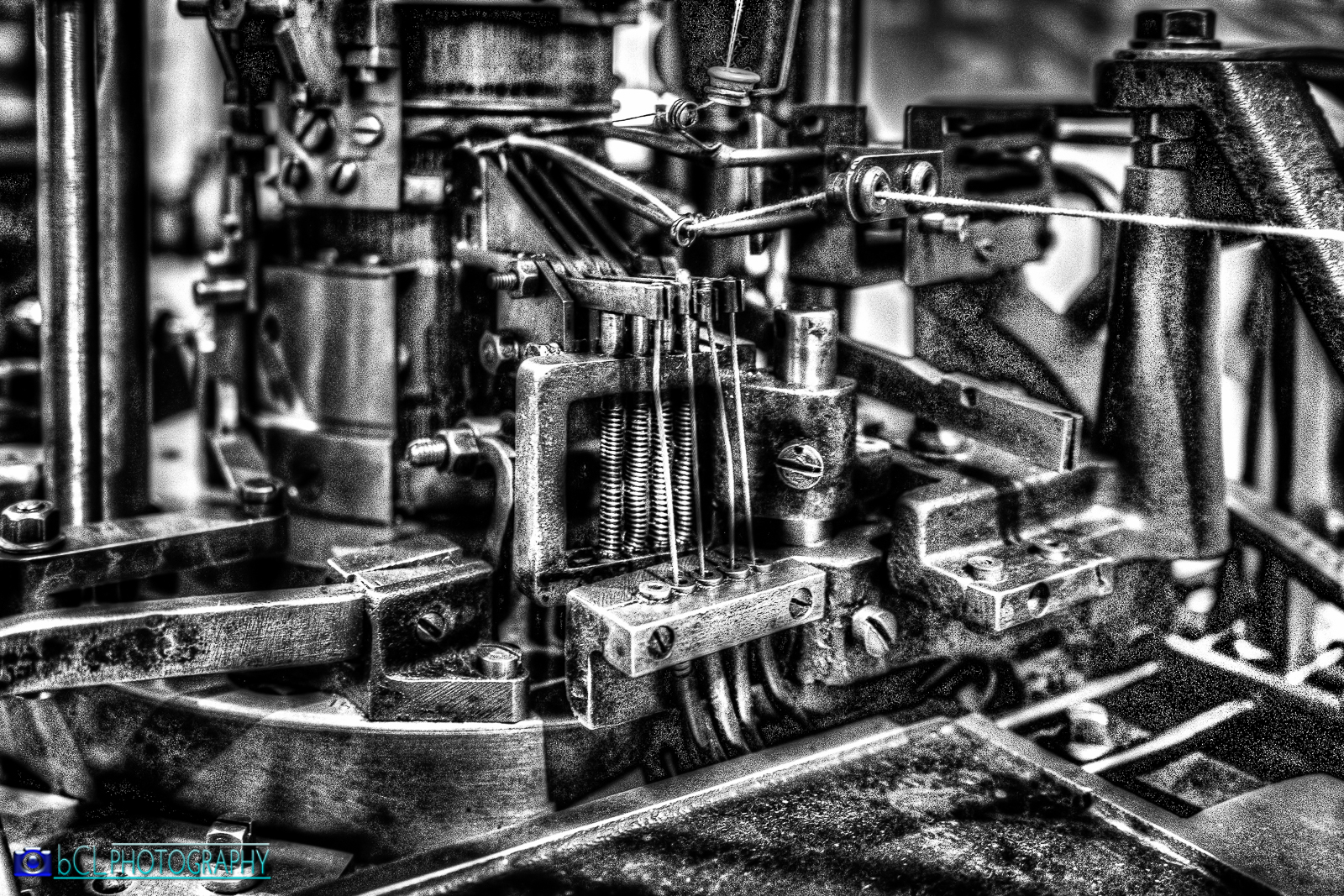
machinery 2Following with this weekly topic, I post a new photo in the series of machinery.

Machinery: A system of related elements that operate in a definable manner in order to achieve a result. 

The machines have always caught my attention. I like to understand how they work. What do all those nuts and bolts?. How to work with such precision?

A machine has a power source and actuators that generate forces and movement, and a system of mechanisms that shape the actuator input to achieve a specific application of output forces and movement.

I hope you like this intricate machinery this week.

Güell Palace

Güell Palace

Thursday Doors ChallengeDOORS

The Palau Güell (Güell Palace) is a mansion designed by the architect Antoni Gaudí for the industrial tycoon Eusebi Güell, and built between 1886 and 1888. It is situated in the Carrer Nou de la Rambla, in the El Raval neighbourhood of the city of Barcelona in Catalonia. It is part of the UNESCO World Heritage Site “Works of Antoni Gaudí” since 1984.

The home is centered on a main room for entertaining high society guests. Guests entered the home in horse-drawn carriages through the front iron gates, which featured a parabolic arch and intricate patterns of forged iron-work resembling seaweed and in some parts a horsewhip. Animals could be taken down a ramp and kept in the livery stable in the basement where the servants resided, while the guests went up the stairs to the receiving room. The ornate walls and ceilings of the receiving room disguised small viewing windows high on the walls where the owners of the home could view their guests from the upper floor and get a ‘sneak peek’ before greeting them, in case they needed to adjust their attire accordingly.

The main party room has a high ceiling with small holes near the top where lanterns were hung at night from the outside to give the appearance of a starlit sky.

It was used in Antonioni‘s film The Passenger as a backdrop for the first meeting between Jack Nicholson and Maria Schneider.

In 2004, visits by the public were completely suspended due to renovations; some of the stone used in the original construction was weak and has cracked over the years causing structural problems within the building. As of 1 February 2008, Palau Güell was partially reopened to the public, with access to limited parts of the building only. It is currently completely open with all restoration work completed in April 2011.

More info: WIkipedia

This is my entry for Norm’s Thursday Doors Challenge.  Thanks Norm for hosting this challenge.

Güell Palace

Güell Palace

Road to Teruel

On the way to Teruel

This is my entry to this week topic. It’s a photography taken on the way to Teruel, a small town located in eastern Spain.

The long straight and the wonderful sky caught my attention. I hope you like it too.

On The Way Home

On The Way Home
I saw myself bursting
with light in a town so
small, and in that moment
i wanted to photograph my
soul.
(c) Brooke Otto 2013

On the Way

Glasses

Old Glasses

Rose Colored Glasses

People take the world as they see it themselves
some see black
some see white
many see grey
as for me?
I see it for what it is….technicolored.

Life is far to wonderful and bright too see it as simple black
it is too deep and mysterious to be only white
it is too exciting and amazing to be described as grey
There’s a reason that there is color present everywhere.
If the world were colorless, so life would be… continue reading

Avery Bellafiore

Gardenia

Gardenia

Gardenia is a genus of flowering plants in the coffee family, Rubiaceae, native to the tropical and subtropical regions of Africa, southern Asia, Australasia and Oceania.

Gardenia plants are prized for the strong sweet scent of their flowers, which can be very large in size in some species.

In China and Japan Its blossom is used as a yellow dye, used on fabric and food. Its fruits are also used in traditional Chinese medicine for their clearing, calming, and cooling properties.

In France, gardenias are the flower traditionally worn by men as boutonnière when in evening dress.

More info; Wikipedia

Gardenia

Gardenia

images for a free world

struggling together

- everything related to mental health.

Broken Light Collective

Photographers living with or affected by mental health challenges; supporting each other one photograph at a time.

caryl beach Art

visual artist : contemplating time, memory, and transformation.

SAVVY

Adulting for Dummies

Out of My Write Mind

The blog of Sandy J. White

Mistakes & Adventures

What I've always wanted

TIMES OF LION

Exposing Truth

fauxcroft

living life in conscious reality

LEN Journeys

Travel, Lifestyle & Photography

Whippet Wisdom - a Highland Journey

A journey through the seasons with adopted whippets, a poet and a camera

Christine's Blog

Every Day is a New Adventure!

THEGIRLVERSUSWORLD

WHEN IN DOUBT, WRITE IT DOWN..!!

niecodziennik

notatki. fotografie. myśli

Half a photograph

Because it's fun to click imperfect photographs

Madame Zenista

Thats what she said!

Penfountain's Blog

Fountain pen, inks, nibs, paper and general stuff

Fountain pen blog

Pens, inks, notebooks and other accessories

Scriptorium Pens

Custom, Handcrafted Fountain Pens

ankcody.wordpress.com/

LEARN AND EXPLORE

kirilson photography

the stories behind the pictures, and vice versa

Locksmith in Lipstick

Life, love, laughter and locks

The Journey of My Left Foot (whilst remembering my son)

I have Malignant Melanoma, my son had Testicular Cancer

J. A. Allen

Scribbles on Cocktail Napkins

Smart Veg Recipes

Welcome to home made, vegeterian, healthy & kids friendly recipes

M.T. Bass

Books, Stories & Musings

Nib & Muck

Stationery can be sexy

Read, Write, Inspire

Geek, Chic and Chaotically Organised!

Krafting with Karen

All things stationery and planner related

Puddleside Musings

The craftful musings of an Irish girl.

The Organizeaholic

Necessity, hobby, or obsession?

Breedskool™

Grow your Business and income - How to make Money online 2023

Squeeze the Space Man's Taco

A journey into Cade's world